


The Ultimate Guide to ISO Integration: Everything Small Businesses Need to Succeed with 9001, 27001, and 42001 Together
- Andrew Craddock
- Jan 9
- 5 min read

Ready to transform your small business into a well-oiled, compliant machine? If you're juggling quality management, information security, and AI governance, you're probably wondering if there's a smarter way to handle all these standards without drowning in paperwork. Good news – there absolutely is!
Integrating ISO 9001, ISO 27001, and ISO 42001 isn't just possible for small businesses; it's actually the smart move that'll save you time, money, and a whole lot of headaches. Let's dive into how you can make this work for your business.
Why Your Small Business Should Care About ISO Integration
Think about it – running three separate management systems is like having three different filing cabinets for the same documents. It's inefficient, confusing, and frankly, exhausting. When you integrate these standards, you're creating one streamlined system that covers quality (ISO 9001), information security (ISO 27001), and AI management (ISO 42001).
Here's the thing that gets small business owners excited: all three standards share what's called a "High-Level Structure." This means they're designed to work together like puzzle pieces. Instead of reinventing the wheel three times, you can build once and apply everywhere.

The real benefits hit where it matters most:
Cut your admin burden in half – One set of policies instead of three separate frameworks
Streamline your audits – Cover all three standards in one go instead of separate audit cycles
Reduce training time – Your team learns one integrated approach, not three different systems
Save serious money – No more duplicate documentation, processes, or consultant fees
Understanding Your Three Powerhouse Standards
Before we get into the integration magic, let's make sure you're clear on what each standard brings to your business:
ISO 9001 (Quality Management) is all about keeping your customers happy. It ensures your products and services consistently meet expectations, and your processes are designed to prevent problems before they happen.
ISO 27001 (Information Security) protects your business data and your customers' information. In today's digital world, this isn't optional – it's essential for maintaining trust and avoiding costly breaches.
ISO 42001 (AI Management) is the new kid on the block, helping businesses manage artificial intelligence responsibly. Whether you're using AI for customer service, data analysis, or automation, this standard keeps you on the right side of risk and regulation.
The Smart Integration Strategy That Actually Works
Here's where most small businesses go wrong – they try to implement everything at once. Don't do that to yourself! Success comes from a phased approach that builds momentum as you go.
Phase 1: Get Your Foundation Right (Month 1)
Start by assembling your integration dream team. You don't need a massive committee – just representatives from your key areas: operations, IT, and whoever handles your customer-facing processes. These people will become your ISO champions.
Next, conduct a gap analysis. This sounds fancy, but it's really just figuring out what you're already doing that meets these standards and what needs work. You'll be surprised how much you're probably already doing right!
Phase 2: Design Your Integrated System (Month 2)
This is where the magic happens. Instead of creating three separate policy documents, you're building one integrated management system policy. Think of it as your business's constitution that covers quality, security, and AI governance all at once.
Map out where your processes overlap. For example, your customer data handling procedures probably touch quality (ensuring accurate information), security (protecting personal data), and AI (if you're using customer data for machine learning). One well-designed process can satisfy requirements across all three standards.
Phase 3: Implementation That Sticks (Month 3)
Roll out your integrated procedures with confidence. Train your team on the unified approach rather than overwhelming them with separate training sessions for each standard. When everyone understands how quality, security, and AI governance work together, compliance becomes second nature.
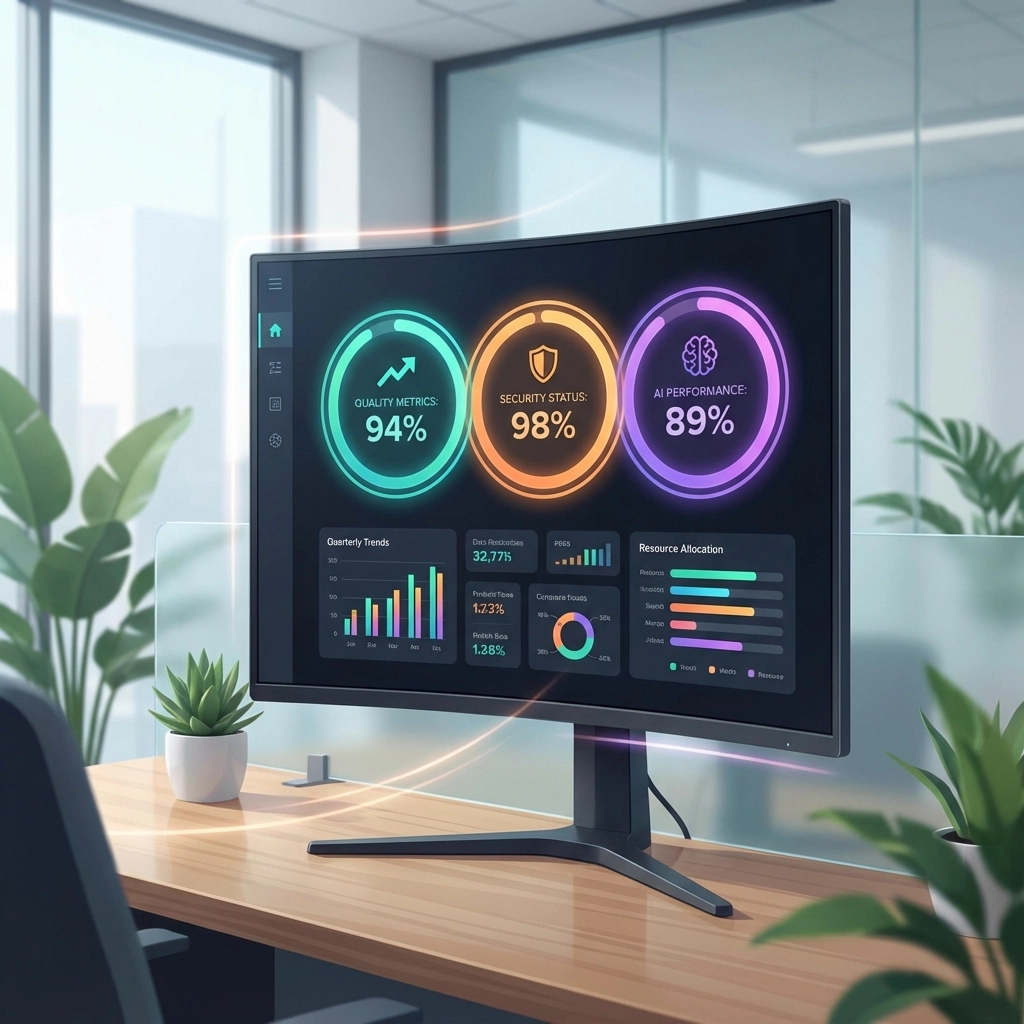
Set up monitoring systems that track performance across all three areas. Modern businesses can use dashboards that show quality metrics, security incidents, and AI performance in one view. This integrated monitoring makes it easier to spot patterns and prevent issues.
Practical Tips That Make Integration Effortless
Leverage your existing documentation smartly. If you already have ISO 27001 certification, you're ahead of the game. Build your quality and AI management processes around your existing security framework rather than starting from scratch.
Focus on data as your integration cornerstone. Here's something most consultants won't tell you – data management is the golden thread that connects all three standards. Get your data classification, storage, and processing right, and you'll satisfy major requirements across quality, security, and AI governance simultaneously.
Avoid the documentation trap. Small businesses often create way too much paperwork thinking more is better. Instead, create lean documentation that clearly shows how each process addresses multiple standards. One risk register can cover quality risks, security threats, and AI-related concerns.
Think like your auditor. When designing your integrated system, ask yourself: "If an auditor walked in tomorrow, could they easily see how we address quality, security, and AI management?" If the answer is yes, you're on the right track.
Common Pitfalls (And How to Dodge Them)
Pitfall 1: Treating integration like three separate projects. The solution? From day one, think of this as building one comprehensive management system, not three systems that happen to share some components.
Pitfall 2: Overlooking post-deployment monitoring. Especially with ISO 42001, you need continuous monitoring of AI model performance, data quality, and security. Set up automated alerts and regular reviews to catch issues early.
Pitfall 3: Neglecting supplier management. Your integrated approach needs to extend to your supply chain. Update your supplier agreements to address quality, security, and AI governance requirements in one comprehensive contract.

Your Integration Readiness Checklist
Before you start implementation, make sure you have:
Senior management commitment (this is non-negotiable for success)
Clear understanding of which business processes will be included
Identified team members who will champion each standard area
Basic inventory of your current quality, security, and data management practices
Realistic timeline that allows for proper implementation
Making It Happen: Your Next Steps
The beauty of integrated ISO implementation is that you can start small and build momentum. Begin with the areas where your business already has some structure – maybe you're already tracking quality metrics or have basic cybersecurity measures in place.
Don't try to be perfect on day one. The standards are designed to encourage continuous improvement, which means you can refine your approach as you learn what works best for your business.
Remember, thousands of small businesses have successfully implemented these standards. You're not reinventing the wheel – you're adapting proven frameworks to fit your unique business needs.
Ready to Transform Your Business?
Integrating ISO 9001, 27001, and 42001 isn't just about compliance – it's about building a business that's resilient, trustworthy, and ready for the future. When you get this right, you're not just checking boxes; you're creating competitive advantages that set you apart from businesses still struggling with fragmented approaches.
The question isn't whether you can afford to integrate these standards – it's whether you can afford not to. In 2026, businesses that can demonstrate quality, security, and responsible AI use aren't just compliant; they're leaders.
Want to explore how this integration could work specifically for your business? Book a consultation and let's map out your path to streamlined compliance that actually strengthens your operations.
Your integrated management system journey starts with a single step. Are you ready to take it?
Comments