


Counting the Cost: What Does ISO 9001 Actually Cost an SME?

Let's talk about the elephant in the room: money. You've heard about ISO 9001, you understand the benefits, but now you're staring at your spreadsheet wondering if your SME can actually afford it. The answer? Probably yes, but only if you go in with your eyes wide open about what you're really paying for.
Here's the thing: ISO 9001 certification isn't a single line item on your budget. It's an investment spread across certification bodies, consultancy support, internal resources, and time. The good news? When you break it down properly, it's far less intimidating than you think. Even better? Many SMEs find the certification pays for itself within the first year through efficiency gains and waste reduction.
Let's pull back the curtain and look at the real numbers.
The Real Numbers: What You're Actually Looking At
According to recent industry data, ISO 9001 certification for SMEs typically ranges between £8,000 and £40,000 for initial certification[1]. That's a wide spread, but it reflects the reality that your actual costs depend heavily on your business size, complexity, and how you approach implementation.
For smaller SMEs with 1–25 employees, you're looking at more manageable figures. Most businesses in this bracket spend between £15,000 and £38,000 depending on whether they take a DIY approach or bring in expert consultants[1].
Here's where it gets interesting: that investment isn't a black hole. It's buying you a documented quality management system, trained staff, improved processes, and a certification that opens doors with clients who demand it. But we're getting ahead of ourselves, let's break down exactly where your money goes.

Breaking Down the Main Cost Components
Certification Body Audit Fees
This is the unavoidable baseline cost. You need an accredited certification body (like BSI, Alcumus, or Lloyd's Register) to audit your systems and issue your certificate. For small businesses, expect to pay £4,000–£6,000 for the initial certification audit[1][2].
These bodies typically charge per audit day, with rates ranging from £400–£1,100 per day[2]. A small SME usually needs 3–5 days of auditor time across the stage 1 (documentation review) and stage 2 (on-site implementation) audits.
Consultancy and Expert Support
This is where your costs can vary wildly based on your approach. Professional ISO 9001 consultants charge anywhere from £250–£800 per hour, with total project fees potentially running from £4,000 to £40,000 depending on how much hand-holding you need[1].
Before you balk at those numbers, consider this: a good consultant doesn't just create documents for you. They're training your team, streamlining your existing processes, identifying efficiency gains, and helping you avoid costly mistakes that could delay certification or, worse, result in a failed audit.
At Expertise, we've seen countless SMEs who tried the DIY route, got stuck halfway through, then had to bring in consultants anyway, essentially paying twice. Our ISO 9001 Document Readiness Review service is designed to prevent exactly that scenario by getting you audit-ready efficiently.
Internal Resource Allocation
Here's the cost everyone underestimates: your staff's time. Whether you hire a consultant or go DIY, someone internal needs to coordinate the project, gather information, implement changes, and maintain the system.
For a small business, expect to allocate £5,000–£10,000 worth of internal staff time for a DIY approach, or £4,000–£6,000 if you're working with consultants who handle the heavy lifting[1].
This time investment includes meetings, process mapping, document creation, internal audits, and management reviews. It's real work that pulls people away from their day-to-day responsibilities, factor that opportunity cost into your calculations.
Employee Training
Your team needs to understand the quality management system they'll be working within. Training costs typically run £400–£1,200 depending on the size of your team and depth of training required[2].
This covers everything from ISO 9001 awareness training for all staff to more detailed training for those managing specific processes or conducting internal audits.
Documentation Systems and Software
You'll need somewhere to store and manage your quality management documentation, procedures, and records. Budget £1,600–£4,000 for documentation systems, whether that's quality management software or a well-structured SharePoint setup[1].
Some SMEs start with simple shared drives and spreadsheets. That's fine initially, but as you grow, proper document control becomes crucial for maintaining certification.

Two Paths to Certification: Which Costs What?
Let's put this together into real-world scenarios.
The DIY Approach: £15,000–£22,000
This route works if you have someone internally with project management skills and the time to dedicate to it. Your costs break down roughly as:
Certification body fees: £4,000–£6,000
Documentation system: £1,600–£2,400
Internal resources: £6,000–£8,000
Basic consultant guidance: £2,400–£4,000
Training: £1,600–£2,400
You're saving money on consultancy, but investing heavily in internal time. This approach typically takes 6–12 months from start to certification.
The Consultant-Led Approach: £24,000–£38,000
This is the faster, lower-risk option where experts guide you through the entire process. Your breakdown looks like:
Certification body fees: £4,000–£6,000
Documentation system: £2,400–£4,000
Internal resources: £4,000–£6,000
Comprehensive consulting: £12,000–£20,000
Training: £1,600–£2,400
Yes, it costs more upfront. But experienced consultants typically get you certified in 3–6 months, minimise costly errors, and ensure your system actually improves your business rather than just ticking compliance boxes.
The Hidden Savings Nobody Mentions
Here's what makes ISO 9001 different from other business expenses: it frequently pays for itself.
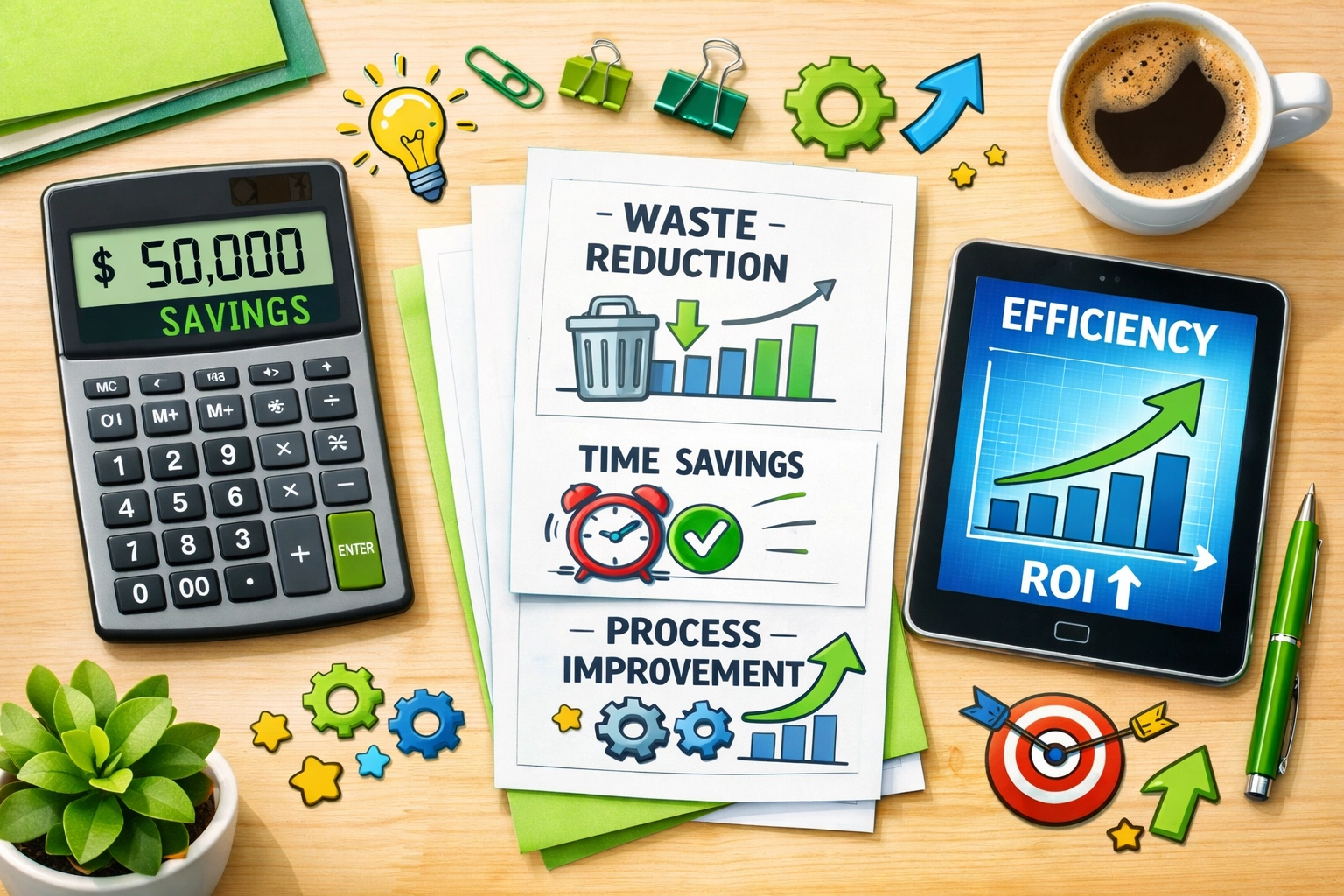
When you implement ISO 9001 properly, you're not just buying a certificate: you're systematically identifying and eliminating waste in your processes. SMEs consistently report that the efficiencies gained through ISO 9001 implementation recoup the certification costs within 12–18 months.
Think about it: How much does a quality issue cost you? Lost materials, wasted labour, customer complaints, potential contract penalties, damage to reputation. Now multiply that by how many preventable issues occur in a year.
ISO 9001 forces you to document what works, train people consistently, and catch problems before they become expensive mistakes. Those are real savings with real bottom-line impact.
Additionally, many SMEs find that ISO 9001 certification opens doors to contracts they couldn't bid on before. If even one new client opportunity materialises because you're certified, the certification has likely paid for itself.
Ongoing Costs: It Doesn't End at Certification
Once certified, you're not done paying: but the ongoing costs are far more manageable. Expect to budget:
Annual surveillance audits: £800–£2,000 per year[2]
Internal audit time: £1,000–£2,000 annually (staff time conducting required internal audits)
System maintenance: £500–£1,500 yearly (software licenses, document updates)
Periodic training refreshers: £300–£800
Every three years, you'll need a full recertification audit, which costs roughly the same as your initial certification audit.
The key is that these ongoing costs are predictable and budgetable. You're not facing surprise expenses: you know exactly what ISO 9001 will cost you year over year.
Making It Work for Your SME: Practical Strategies
So how do you make ISO 9001 financially viable if you're working with typical SME constraints?
Phase your investment. You don't need to spend everything upfront. Start with our pre-audit consultation service to understand exactly where you stand, then tackle implementation in stages based on your cash flow.
Negotiate fixed fees. Many consultants (including us at Expertise) offer fixed-price packages for ISO 9001 implementation. This eliminates the anxiety of hourly rates spiralling and lets you budget accurately.
Choose local certification bodies. Travel costs for auditors add up quickly. A local certification body means lower expenses and easier scheduling.
Leverage existing systems. You're probably already doing 60–70% of what ISO 9001 requires: you just haven't documented it. Good consultants help you recognise and formalise what's already working rather than reinventing everything.
Consider grants and support. Some regions offer funding support for SMEs pursuing quality certifications. It's worth investigating what's available in your area before you start spending.
The Bottom Line: Is It Worth It?
Let's be brutally honest: £15,000–£40,000 is serious money for an SME. But here's the question you should really be asking: What's the cost of not being ISO 9001 certified?
How many tender opportunities are you losing because "ISO 9001 required" appears in the specifications? How much are preventable quality issues costing you annually? What's the value of the competitive edge certification gives you?
For most SMEs, ISO 9001 isn't an expense: it's an investment that strengthens your business, opens doors, and creates efficiencies that cascade through your entire operation.
The key is going into it with realistic expectations about costs, a clear implementation strategy, and the right support to get you there efficiently.
If you're ready to explore what ISO 9001 would actually cost your specific business: not hypothetical averages but real numbers based on your size and complexity: let's have that conversation. We'll give you straight answers about investment, timelines, and expected returns. No sales pitch, just transparent information to help you make the right decision for your business.
Because at the end of the day, you deserve to know exactly what you're signing up for: and whether it makes financial sense for where you are right now.
Sources: [1] Industry certification cost analysis, 2025 [2] Certification body pricing data, 2025–2026 [3] SME implementation cost surveys, 2024–2025
Comments