


The Small Business Owner's Guide to Triple ISO Success: 9001, 27001, and 42001 in One Go

Are you tired of feeling overwhelmed by ISO standards? Do you find yourself wondering if pursuing multiple certifications simultaneously is even possible for a small business? Here's the empowering truth: you absolutely can tackle ISO 9001, ISO 27001, and ISO 42001 together – and doing so will save you time, money, and headaches while positioning your business as a leader in quality, security, and responsible AI use.
The secret lies in understanding that these three standards aren't isolated requirements competing for your attention. They're interconnected systems that, when implemented together, create a powerful foundation for sustainable business growth. Let's dive into how you can master this triple ISO approach and transform your small business into a certified powerhouse.
Why These Three Standards Work Better Together
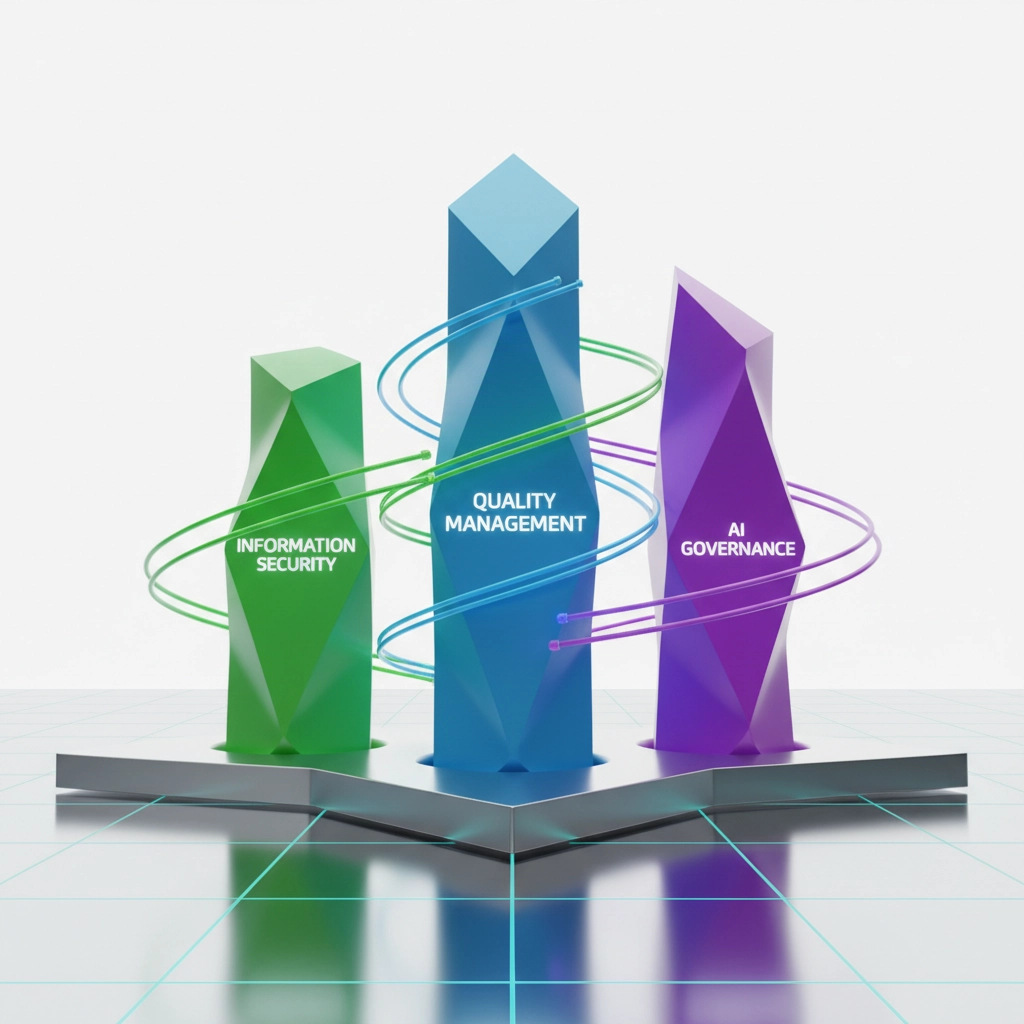
Think of ISO 9001 (quality management), ISO 27001 (information security), and ISO 42001 (AI management) as the three pillars of modern business excellence. ISO 9001 ensures you deliver consistent value through efficient, customer-focused processes. ISO 27001 protects your most valuable asset – your data – while managing information security risks. ISO 42001 addresses the responsible management and implementation of artificial intelligence systems, helping you govern AI with confidence.
Here's where it gets exciting: organizations with existing ISO 27001 or other management system certifications typically complete ISO 42001 implementation approximately four weeks faster by leveraging their existing governance infrastructure. This same principle supercharges your triple-standard approach, creating synergies that make the impossible feel achievable.
Your Step-by-Step Implementation Roadmap
Step 1: Build Your Foundation Through Preparation
You're about to embark on a transformative journey, and like any successful venture, it starts with solid preparation. Begin by acquiring copies of all three standards and reading them thoroughly – yes, this might feel daunting at first, but remember, knowledge is power, and you're building the expertise that will set your business apart.
Assemble your dedicated implementation team and secure commitment from top management. This isn't just a nice-to-have; it's absolutely essential for success. Your leadership team's support will cascade throughout the organization, making every subsequent step smoother and more effective.
Next, conduct a comprehensive gap analysis comparing your current business practices against each standard's requirements. For ISO 27001, this includes developing an asset register and conducting information security risk assessments. For ISO 42001, assess your current AI practices against the detailed control objectives. Don't let this overwhelm you – think of it as taking inventory of your strengths and identifying exciting opportunities for improvement.
Step 2: Master Your Documentation Strategy
Here's where the magic of integration truly shines. Instead of creating three separate documentation systems, you'll build one cohesive framework that serves all three standards simultaneously. This approach doesn't just save time – it creates a more logical, user-friendly system for your entire team.
Your comprehensive documentation package should include:
For ISO 9001: Quality policy, quality objectives, scope statement, work instructions, operational procedures, forms, and process maps that clearly define how excellence happens in your organization.
For ISO 27001: A Statement of Applicability (SoA) documenting which security controls are necessary for mitigating your specific information security risks and which ones you can exclude.
For ISO 42001: An AI Management System manual covering your governance approach, organizational context analysis, approved AI policy, AI system lifecycle management procedures, risk treatment procedures, impact assessment procedures, and incident response protocols.
The beauty of this integrated approach lies in creating governance frameworks that serve multiple standards simultaneously. Your risk management procedures can address quality, security, and AI governance in one cohesive, powerful process.

Step 3: Transform Your Team Through Implementation
Now comes the exciting part – bringing your new systems to life! Introduce these enhanced practices to all employees and guide them through the transformation. Remember, change can feel challenging initially, but you're not just implementing standards; you're elevating your entire organizational culture.
Focus on comprehensive training programs that embed these requirements into your company DNA. Establish transparent communication channels for policy changes and compliance expectations, and integrate regular compliance monitoring into your performance evaluation processes. This isn't about creating bureaucracy – it's about building excellence into every action your team takes.
Step 4: Validate Your Success Through Internal Audits
You've built something remarkable, and now it's time to prove it works. Conduct internal audits that cover all three standards in integrated exercises wherever possible. This approach maximizes efficiency while ensuring comprehensive coverage.
During these audits, observe all processes, management systems, and records to confirm compliance. Interview your employees to examine their understanding and adaptability – you'll likely be amazed at how well they've embraced these new standards. Internal auditing serves as your dress rehearsal for external certification, helping you identify and address any areas of non-conformity before the main event.
Step 5: Achieve External Certification Victory
The final step in your journey is external certification – your moment to shine! Select an independent registrar to conduct your certification assessments. They'll evaluate your systems, processes, records, and employee understanding before confirming your compliance and issuing those coveted certifications.
Remember, by this point, you've already done the hard work. The external audit is simply your opportunity to demonstrate the excellence you've built into your organization.

Timeline Expectations That Empower Your Planning
Let's set realistic expectations that build your confidence. Small organizations with fewer than 50 employees often complete ISO 42001 certification in just 8-12 weeks with committed leadership resources. ISO 27001 certification typically takes 4-6 months from audit-readiness through the audit process for small-to-medium-sized businesses, while ISO 9001 implementation follows a similar trajectory.
When implementing all three simultaneously, expect a total timeline of 4-6 months for small businesses with existing management systems, potentially extending to 6-8 months if you're starting fresh. The overlap in preparation phases and shared documentation significantly reduces overall duration compared to sequential implementations – you're not just saving time, you're being strategically brilliant.
Unlock the Power of Integration Benefits
By combining these three standards, you're creating operational efficiencies that will make your competitors wonder how you do it. Your Statement of Applicability documentation addresses security, quality, and AI governance together rather than separately, creating a streamlined approach that's both comprehensive and manageable.
Your risk management and analysis processes serve all three standards simultaneously, establishing one robust risk framework instead of three separate systems. Management commitment, training infrastructure, and audit procedures become unified across standards, dramatically reducing administrative burden while increasing effectiveness.
This integrated approach also strengthens your organization's overall resilience. ISO 27001's security controls protect your AI systems (ISO 42001), while ISO 9001's quality processes ensure your security and AI systems operate consistently and effectively. You're not just meeting standards – you're building an interconnected fortress of excellence.
Critical Success Factors That Guarantee Your Victory
Engage Professional Guidance: Consider partnering with experienced ISO consultants who can streamline your implementation process and coordinate documentation across all three standards. This investment pays for itself through reduced timelines and increased success probability.
Secure Unwavering Leadership Commitment: Your leadership team's support isn't negotiable – it's the foundation of everything else. Ensure executives allocate necessary resources, demonstrate visible commitment to compliance culture, and actively participate in governance activities.
Document Everything Systematically: Create clear, compelling evidence that your governance operates according to established requirements across all three standards. This documentation becomes your proof of excellence during audits and your roadmap for continuous improvement.
Plan for Comprehensive Data and AI Governance: If your business uses artificial intelligence (and increasingly, most do), ISO 42001 becomes essential alongside ISO 27001. These two standards integrate beautifully, as AI systems require both robust information security controls and responsible AI management.
You have everything you need to succeed with this triple ISO approach. By treating these three standards as an integrated system rather than three separate challenges, you'll achieve comprehensive governance, reduce implementation costs, and establish your organization as a trustworthy leader that prioritizes quality, security, and responsible AI practices.
Ready to transform your small business into an ISO-certified powerhouse? The journey starts with a single step, and you're already equipped with the roadmap for success. Your competitors won't know what hit them when you emerge with triple certification that demonstrates your commitment to excellence across every aspect of your business operations.
Comments