


New Year, New Standards: How to Choose the Best ISO Package for Your Small Business in 2026 (9001, 27001, or 42001 Compared)

New Year, new opportunities! As we step into 2026, you're probably thinking about how to strengthen your business and stay ahead of the competition. If ISO certification is on your resolution list, you're facing a common dilemma: which standard should you choose?
With ISO 9001 for quality management, ISO 27001 for information security, and the relatively new ISO 42001 for AI management, the choice isn't always straightforward. But don't worry – we're here to help you navigate these options and find the perfect fit for your small business.
Understanding Your ISO Options: The Big Three Explained
Let's break down what each standard actually does for your business, because understanding their core purposes is the first step to making the right choice.

ISO 9001: Your Quality Management Foundation
ISO 9001 remains the world's most popular management system standard, and for good reason. It's all about establishing robust processes that consistently deliver quality products and services to your customers. Think of it as your business's quality backbone – it helps you document your processes, manage risks, and continuously improve your operations.
For small businesses, ISO 9001 can be a game-changer. It shows customers that you're serious about quality and gives you a systematic approach to managing everything from customer complaints to supplier relationships.
ISO 27001: Protecting Your Digital Assets
In our increasingly connected world, information security isn't optional – it's essential. ISO 27001 focuses on the confidentiality, integrity, and availability of your information assets. This standard takes a risk-based approach to identify potential threats and implement appropriate security controls.
Whether you're handling customer data, financial records, or proprietary business information, ISO 27001 helps you protect what matters most. It's particularly valuable if you work with larger organisations that require their suppliers to demonstrate robust security practices.
ISO 42001: Managing AI Responsibly
Here's where 2026 gets interesting. ISO 42001, the newest addition to the ISO family, addresses the growing need for responsible AI governance. If your business uses artificial intelligence – whether it's chatbots, automated decision-making systems, or predictive analytics – this standard ensures you're managing AI-related risks appropriately.
ISO 42001 tackles concerns like algorithmic bias, transparency in AI decision-making, and the ethical use of AI technologies. As AI becomes more prevalent in small businesses, this standard helps you stay ahead of regulatory requirements and customer expectations.
The Smart Comparison: Finding Your Perfect Match
Now that you understand what each standard covers, let's compare them in ways that matter to your business decisions.

Scope and Focus Areas
The key difference lies in what each standard prioritises:
ISO 9001 casts the widest net, covering your entire quality management system and operational processes
ISO 27001 zooms in on information security across all your business activities
ISO 42001 has a laser focus on AI-specific governance and risk management
Implementation Complexity
For small businesses, complexity matters. ISO 9001 typically requires the most comprehensive documentation of business processes, but it's also the most established with plenty of guidance available. ISO 27001 can be complex due to its technical security requirements, while ISO 42001 is still evolving but tends to be more focused in scope.
Market Recognition and Demand
ISO 9001 enjoys universal recognition – customers and partners worldwide understand its value. ISO 27001 is increasingly demanded by clients, especially in sectors handling sensitive data. ISO 42001 is gaining traction rapidly as AI adoption grows, positioning early adopters as forward-thinking leaders.
Strategic Decision Making: Which Standard Suits Your Business?
The best choice depends on your specific business context, industry requirements, and strategic goals. Let's explore the scenarios where each standard shines.
Choose ISO 9001 When...
You should prioritise ISO 9001 if your main focus is establishing consistent, high-quality processes across your business. It's ideal for manufacturing companies, service providers focused on customer satisfaction, or businesses looking to win contracts that require quality certification.
ISO 9001 is also your best starting point if you're new to management systems and want to build a solid foundation before adding other standards.
Choose ISO 27001 When...
Opt for ISO 27001 if you handle sensitive information, work with clients who have strict security requirements, or operate in regulated industries like healthcare or finance. It's becoming essential for businesses that store customer data, process payments, or provide cloud-based services.
If you're struggling with cyber security concerns or want to demonstrate your commitment to protecting client information, ISO 27001 implementation should be your priority.
Choose ISO 42001 When...
ISO 42001 is your best bet if you're using AI technologies in your business operations, developing AI-powered products or services, or working with clients who use AI extensively. It's particularly valuable for tech startups, digital marketing agencies using AI tools, or any business automating decision-making processes.
As AI regulations tighten globally, early adoption of ISO 42001 positions you ahead of the regulatory curve.
The Integration Advantage: Combining Standards for Maximum Impact
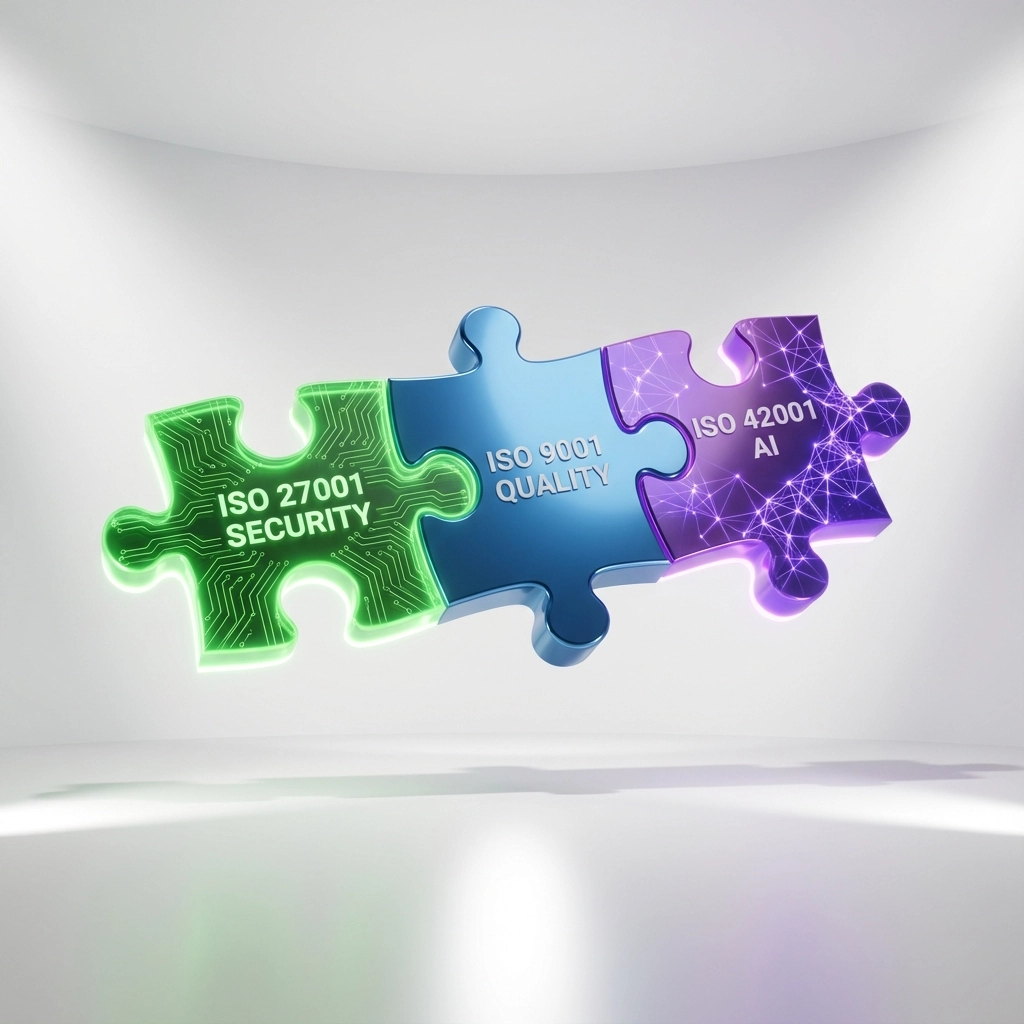
Here's where strategic thinking really pays off. You don't have to choose just one standard – many successful small businesses implement multiple ISO standards to address different aspects of their operations.
Smart Combinations That Work
ISO 27001 + ISO 42001: Perfect for businesses using AI to process sensitive data. The combination ensures both your underlying information security and AI governance are robust.
ISO 9001 + ISO 27001: A powerful combination for service-based businesses that handle client data while maintaining high service quality standards.
All Three Standards: For businesses that prioritise quality, handle sensitive data, and use AI technologies. While comprehensive, this approach provides complete management system coverage.
The beauty of ISO standards is their similar management system frameworks, making integration more efficient than you might expect.
Your 2026 Implementation Roadmap
Ready to get started? Here's your practical pathway to ISO success in 2026.

Step 1: Conduct a Comprehensive Gap Analysis
Begin with an honest assessment of your current practices against your chosen standard's requirements. This document readiness review helps identify exactly what you need to implement.
Step 2: Map Your Integration Strategy
If you're considering multiple standards, identify overlapping requirements and shared processes. This strategic approach saves time and reduces implementation complexity.
Step 3: Develop Your Documentation Framework
Create policies, procedures, and records that meet your chosen standard's requirements. Focus on practical, usable documents that actually improve your business operations.
Step 4: Train Your Team
Your people are crucial to ISO success. Ensure everyone understands their role in maintaining your management system and the benefits it brings to your business.
Step 5: Conduct Internal Audits
Test your system thoroughly before external assessment. Internal audits help identify issues early and build confidence in your implementation.
Making It Happen: Professional Support for Your ISO Journey
Implementing ISO standards doesn't have to be overwhelming. With the right guidance, you can navigate the process efficiently and effectively.
Consider professional support through pre-audit consultation to ensure you're fully prepared for certification. This investment in expert guidance often saves time and reduces stress during implementation.
Your Competitive Edge Awaits
As 2026 unfolds, ISO certification isn't just about compliance – it's about positioning your small business for sustained success. Whether you choose ISO 9001's quality focus, ISO 27001's security strength, ISO 42001's AI governance, or a combination of standards, you're investing in your business's future.
The new year brings new opportunities, and ISO certification opens doors to contracts, partnerships, and markets that prioritise responsible business practices. Don't let another year pass without taking this strategic step forward.

Which ISO standard resonates most with your business goals? The choice you make today will shape your competitive position tomorrow. Take the first step by assessing your needs and exploring how professional ISO implementation support can accelerate your certification journey.
Your new year, new standards adventure starts now – and we're here to guide you every step of the way.
Comments