


The £500 ISO Question: DIY Certification vs Hiring a Consultant – Real Costs Revealed for Micro Businesses

You've seen those tempting £500 ISO certification promises online, haven't you? As a micro business owner, you're probably wondering if you can really get ISO certified for the price of a decent laptop. Let's cut through the marketing fluff and reveal what ISO certification actually costs when you're running a small operation with limited resources.
The truth is, while £500 might cover some basic documentation templates, real ISO certification for micro businesses typically starts around £1,300-£2,500 for a genuine DIY approach. But here's where it gets interesting – the choice between doing it yourself or hiring a consultant isn't just about upfront costs.
The Real DIY Certification Costs
Let's start with what you'll actually pay when going the DIY route. According to UK certification body pricing, micro businesses with under 10 employees face these typical costs:
Stage 1 (Documentation Review): £400-£1,200 This initial audit reviews your quality management system documentation before the main assessment.
Stage 2 (Main Certification Audit): £700-£2,000 The comprehensive on-site audit that determines whether you achieve certification.
Annual Surveillance Audits: £500-£1,200 Ongoing monitoring visits to ensure you maintain standards.
Recertification (Every 3 Years): £800-£1,500 Complete re-assessment of your entire system.
For a realistic micro business scenario, you're looking at £2,000-£4,000 for initial certification, with annual surveillance costs from £900. Some streamlined providers offer packages starting at £999, but these often come with limitations on complexity and support.

What Consultant-Led Certification Actually Costs
When you bring in professional ISO consultants, the investment jumps significantly. Here's the reality:
Consultancy Support: £800-£15,000 (depending on involvement level) Combined Total: £3,500-£20,000+ for comprehensive consultant-led implementation
The wide range reflects different service levels. Basic consultancy might involve document templates and email support, while full-service packages include on-site visits, staff training, mock audits, and hand-holding through the entire process.
A balanced approach for a 15-person business typically breaks down as:
Initial Certification: £2,100
Limited Consultancy Support: £1,800
Staff Training: £400
Three-year total: £6,000 (averaging £2,000 per year)
Hidden Costs That Catch Micro Businesses Off Guard
The sticker price never tells the whole story. Whether you choose DIY or consultant support, these hidden expenses can ambush your budget:
Staff Time Investment DIY certification demands significant internal resources. Your team will spend weeks creating documentation, implementing processes, and preparing for audits. That's time not spent serving customers or growing revenue.
Learning Curve Delays Without prior ISO experience, expect 6-12 months for DIY implementation versus 2-4 weeks with consultant support. Longer implementation means delayed certification benefits like enhanced credibility and new contract opportunities.
Failure and Rework Costs Poorly prepared documentation leads to audit failures requiring expensive re-assessments. A failed Stage 2 audit could cost an additional £700-£2,000 in re-audit fees.

When DIY Makes Perfect Sense
Choose the DIY path if you have:
Strong Internal Capabilities Someone on your team has prior ISO experience or quality management background
Available Staff Capacity You can dedicate internal resources without disrupting core business operations
Budget Constraints Initial cash flow limitations make consultant fees prohibitive
Simple Operations Single-site business with straightforward processes and minimal complexity
Long-term Vision You want to build internal ISO expertise for ongoing management and potential expansion
The DIY approach creates valuable internal knowledge that stays with your business long after certification. You'll understand every aspect of your management system because you built it yourself.
When Consultant Support Becomes Essential
Professional consultancy pays off when you face:
Tight Deadlines You need certification quickly for specific contracts or market opportunities
Complex Operations Multiple sites, diverse services, or intricate processes that require expert navigation
No Internal Experience Your team lacks quality management background or ISO familiarity
Multiple Standards Pursuing ISO 9001, ISO 14001, and ISO 27001 simultaneously benefits from integrated consultant expertise
Risk Aversion You can't afford audit failures or delays that might impact business opportunities
Consultants bring pre-built templates, proven processes, and audit preparation that significantly reduces failure risk. Their experience helps avoid common pitfalls that trap DIY implementers.

Real-World Success Stories
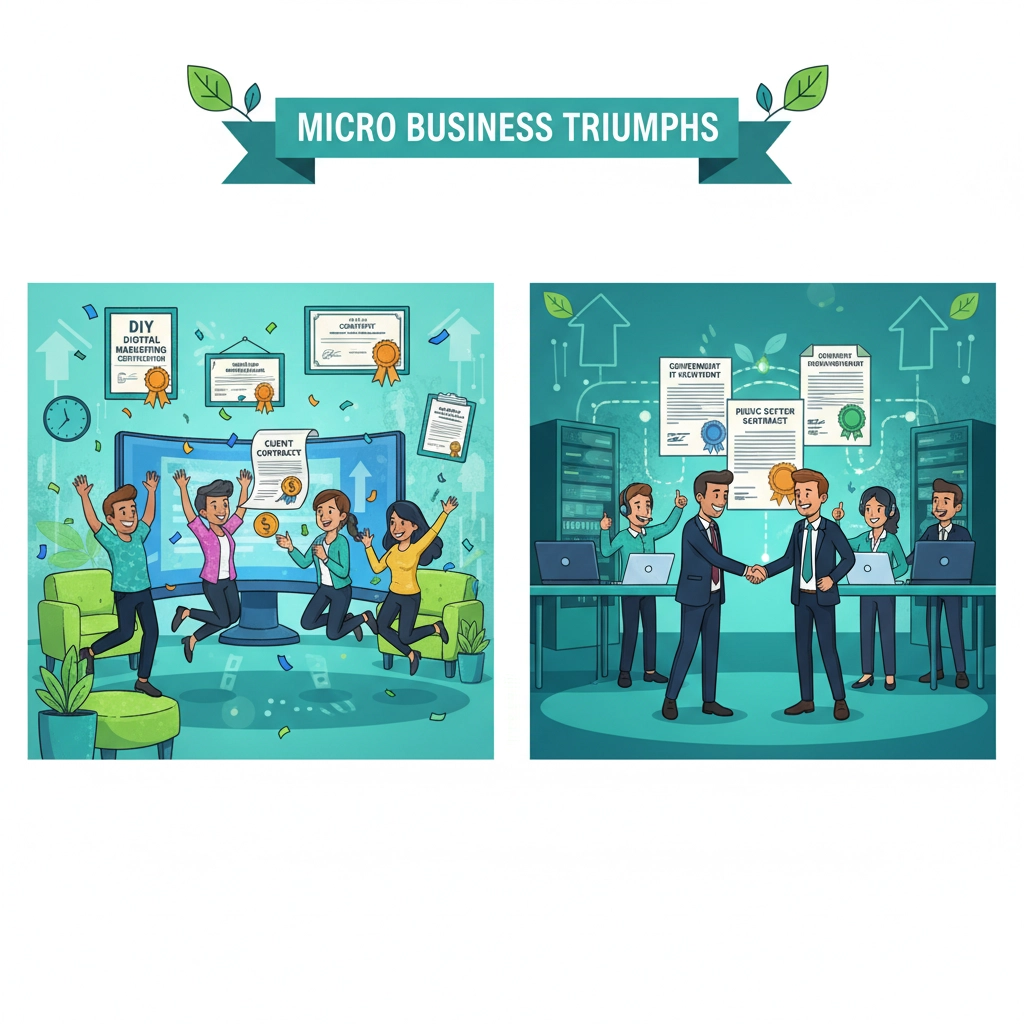
Sarah's Marketing Agency (8 employees) Chose DIY ISO 9001 implementation spending £2,400 over 8 months. Despite initial struggles with documentation, they achieved certification and won two new contracts worth £45,000 within 6 months.
Tom's IT Support Business (12 employees) Invested £8,500 in consultant-led ISO 27001 implementation completed in 6 weeks. The certification opened doors to government contracts generating £120,000 additional revenue in year one.
Both approaches worked, but the choice aligned with each business's capabilities, timeline, and risk tolerance.
Smart Hybrid Approaches
Many successful micro businesses blend DIY and consultant support:
Phase 1: DIY Foundation Use consultant templates and basic guidance to create initial documentation
Phase 2: Expert Review Hire consultant for gap analysis and pre-audit preparation
Phase 3: Independent Maintenance Manage ongoing compliance internally with occasional consultant check-ins
This hybrid model typically costs £3,000-£6,000 initially but provides better long-term value than pure consultant dependence.
Making Your Investment Decision
Before choosing your path, calculate the opportunity cost honestly:
Revenue Impact How much new business could ISO certification generate? Even one £30,000 contract justifies a £2,000 certification investment with 1,500% ROI.
Internal Resources Can your team dedicate 2-4 hours weekly for 6 months without impacting service delivery?
Risk Tolerance What happens if certification delays cost you a major contract opportunity?
Learning Value Will internal ISO expertise benefit your long-term business strategy?
The £500 certification question reveals a fundamental truth: real ISO certification requires serious investment whether through money, time, or both. DIY approaches starting around £2,000 work brilliantly for motivated micro businesses with available resources. Consultant support beginning around £4,000 makes sense when speed, complexity, or expertise gaps demand professional guidance.
Your certification journey doesn't have to break the bank, but it does require realistic budgeting and honest assessment of your internal capabilities. Choose the approach that aligns with your resources, timeline, and long-term vision.
Ready to explore professional ISO support that fits your micro business budget? Get in touch with our team to discuss your specific certification needs and discover cost-effective solutions that work for smaller operations.
Comments