


How to Get ISO 9001 Ready in 5 Simple Steps (Without Breaking Your Small Business Budget)

Are you tired of losing potential clients because you don't have ISO 9001 certification? Does the thought of implementing quality management systems make your head spin and your wallet feel lighter? You're not alone! Many small business owners feel overwhelmed by the prospect of achieving ISO 9001 certification, assuming it requires deep pockets and endless bureaucracy.
Here's the truth: ISO 9001 certification doesn't have to drain your resources or transform your business into a paperwork nightmare. With the right approach, you can achieve certification in 2-3 months without hiring expensive consultants or drowning in unnecessary documentation. Let's break down exactly how you can get ISO 9001 ready while keeping your budget intact and your sanity preserved.
Step 1: Master the Standard and Discover What You're Already Doing Right
Before you panic about compliance gaps, take a deep breath and start with understanding what ISO 9001 actually requires. You don't need to become a quality management expert overnight, but you do need a solid grasp of the standard's core principles.
Purchase a copy of ISO 9001:2015 or find a comprehensive summary: this initial investment will save you thousands in unnecessary consulting fees later. Focus on understanding the process-based approach, customer focus, leadership engagement, and continuous improvement principles that form the backbone of the standard.
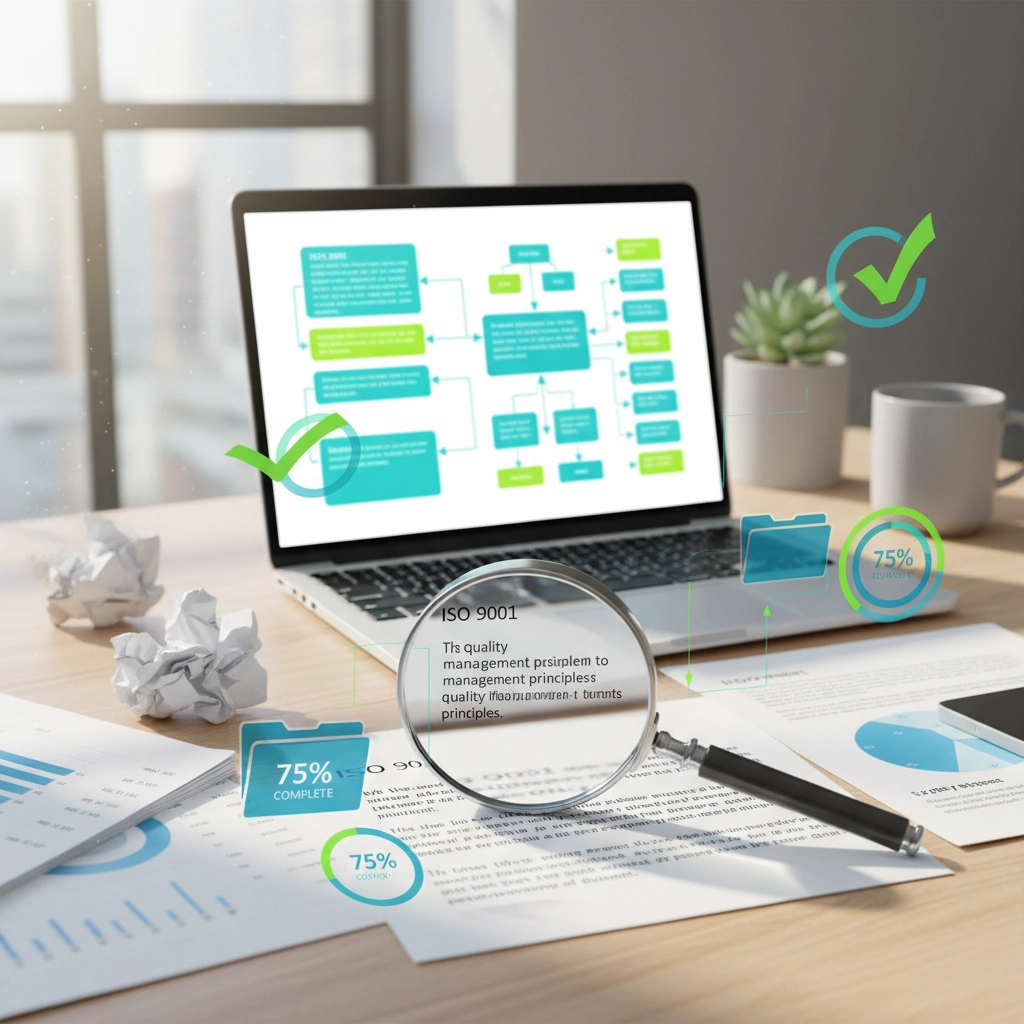
Now comes the exciting part: conducting your gap analysis. This is where you'll likely discover you're already doing much more right than you think! Map out your current business processes and compare them against ISO 9001 requirements. You'll be surprised to find that many of your existing practices: from handling customer complaints to training new employees: already align with the standard's expectations.
Budget-Smart Tip: Skip expensive training courses at this stage. Instead, invest in quality templates and guides specifically designed for small businesses. These resources typically cost under £200 and provide everything you need to understand the requirements without overwhelming complexity.
Step 2: Become Your Own ISO Champion and Create a Realistic Action Plan
Here's a game-changer: you don't need to hire a dedicated quality manager! Instead, appoint someone within your existing team: whether that's you, a senior employee, or a trusted manager: as your ISO champion. This person will drive the project forward, coordinate activities, and serve as the primary contact with your certification body.
Your ISO champion should create a practical implementation plan that includes specific, measurable objectives tied to your business goals (like reducing customer complaints by 20% or improving delivery times), realistic timelines that won't disrupt daily operations, clear role assignments so everyone knows their responsibilities, and a sensible resource allocation that won't strain your budget.
Remember, this isn't about perfection: it's about creating a system that works for your business size and complexity. A three-person accounting firm needs a vastly different approach than a 50-employee manufacturing company, and that's perfectly okay!
Budget-Smart Tip: Use free project management tools like Trello or Asana to track your implementation progress. These platforms offer everything you need without monthly subscription fees for basic project coordination.
Step 3: Build Documentation That Actually Makes Sense for Your Business
This step terrifies most small business owners, but it shouldn't! The key to budget-friendly ISO 9001 documentation is keeping it fit-for-purpose. Your quality management system should reflect how your business actually operates, not how you think it should operate according to some textbook ideal.
Start with the essentials: a clear quality policy that reflects your commitment to customers, measurable quality objectives that align with your business goals, documented processes for your core activities, straightforward procedures for critical functions, and simple work instructions where needed.
The golden rule? If a process doesn't add value to your business or help you serve customers better, don't overcomplicate it with unnecessary documentation. Your system should support your operations, not burden them with bureaucratic overhead.

Many small businesses make the mistake of creating volumes of documentation they'll never use. Instead, focus on practical, user-friendly documents that your team will actually reference and follow. A simple one-page process flow chart often works better than a ten-page procedure manual that nobody reads.
Budget-Smart Tip: Invest in affordable QMS software designed for small businesses. These platforms typically cost £50-150 monthly and include templates, document control features, and compliance checklists that eliminate the need for expensive custom development.
Step 4: Roll Out Your System and Prove It Works Through Internal Audits
Implementation is where your planning pays off! Start by training your team on the new processes: but keep it practical and relevant to their daily work. Your employees need to understand not just what to do, but why these processes benefit them and your customers.
Focus on embedding the quality mindset into your existing culture rather than imposing external requirements. When your team sees how standardized processes reduce errors, improve efficiency, and enhance customer satisfaction, they'll become natural advocates for your quality system.
Once you've been operating under your new system for about two months, conduct internal audits to verify everything works as intended. This step is crucial: it's your chance to identify and fix issues before the external certification audit, potentially saving you from costly re-audits.

Your internal audits don't need to be elaborate affairs. Simple checklists and structured reviews can effectively verify that your processes meet ISO 9001 requirements while identifying opportunities for improvement.
Budget-Smart Tip: Train an existing employee to conduct internal audits rather than hiring external consultants. Many QMS platforms provide audit templates and training resources that make this completely achievable in-house.
Step 5: Choose Your Certification Body Wisely and Ace Your External Audit
Selecting the right certification body can significantly impact both your costs and experience. Research accredited registrars in your area and compare their pricing structures, industry experience, and reputation. Don't automatically choose the cheapest option: look for value and expertise in your sector.
Before your external audit, ensure you've collected evidence demonstrating consistent operation of your quality management system for at least two months. This includes records of internal audits, management reviews, customer feedback handling, and corrective actions.
The certification audit typically involves two stages: a documentation review to verify your procedures meet ISO 9001 requirements, followed by an on-site assessment to confirm you're actually implementing what you've documented.
Prepare your team by conducting mock audits and ensuring everyone understands their role in demonstrating compliance. The external auditor isn't there to catch you out: they want to verify that your system works effectively for your business.
Budget-Smart Tip: Some certification bodies offer reduced rates for small businesses or package deals that include surveillance audits. Ask about these options during your selection process, as they can provide significant long-term savings.
Your Path to Certification Success Without Financial Stress
The total cost of ISO 9001 certification for a small business typically ranges from £3,000-£8,000, depending on your size, complexity, and chosen approach. This investment pays dividends through improved efficiency, reduced errors, enhanced customer confidence, and access to new markets that require certification.
Key strategies for keeping costs manageable include leveraging technology solutions designed for small businesses, using internal resources wherever possible, focusing on practical documentation rather than excessive paperwork, and choosing certification bodies that understand small business needs.
Remember, ISO 9001 certification isn't just about meeting external requirements: it's about building a foundation for sustainable growth and customer satisfaction. When implemented thoughtfully, your quality management system becomes a competitive advantage that drives real business value.
Your certification journey doesn't end with receiving your certificate. The real benefits come from continuously improving your processes, engaging your team in quality initiatives, and using your ISO 9001 system to deliver exceptional customer experiences.
Ready to take the first step toward ISO 9001 certification? The path is clearer and more affordable than you might think. With proper planning, practical implementation, and a focus on your business's actual needs rather than theoretical perfection, you can achieve certification without breaking your budget or overwhelming your team.
Don't let cost concerns hold you back from the competitive advantages that ISO 9001 certification provides. Start with Step 1 today: understanding the standard and conducting your gap analysis. You might be surprised by how much you're already doing right!
Comments