


Decoding the Conversation: How NLP Helps Small Businesses Understand Their Customers

Ever feel like your customers are speaking a language you just can't quite crack? You're reading reviews, scanning social media mentions, and sifting through support tickets, but the sheer volume of feedback makes it impossible to spot what really matters. What if you could have a tool that reads between the lines for you, picking up on patterns you'd never catch on your own?
That's exactly where Natural Language Processing (NLP) comes in. And no, we're not just talking about chatbots here. NLP is quietly transforming how small businesses understand, engage with, and retain their customers: without needing a data science degree or a massive budget.
Let's decode this together.
What Exactly Is NLP? The Bridge Between Human Language and Machine Understanding
At its core, NLP is the branch of artificial intelligence that helps computers understand, interpret, and respond to human language. Think of it as a translator sitting between your customers' messy, emotional, sometimes sarcastic words and the structured data your business can actually use.
According to IBM, over 80% of customer data is unstructured: reviews, emails, chat logs, social posts: and most of it goes completely unused. NLP changes that equation by turning all that raw text into actionable insights.

Here's the thing: humans communicate in wonderfully chaotic ways. We use slang, sarcasm, cultural references, and context that shifts depending on who's talking. NLP algorithms are trained to make sense of this chaos, identifying sentiment, intent, and meaning so you don't have to read every single comment yourself.
For small businesses, this isn't just a nice-to-have: it's a competitive advantage that used to be reserved for enterprises with deep pockets.
Practical Ways Small Businesses Can Use NLP Today
Let's move past the theory and get into the practical stuff. Here are three powerful ways NLP can work for your business right now:
1. Sentiment Analysis: Know How Your Customers Really Feel
Imagine automatically knowing whether your latest product launch is generating excitement or frustration: without manually reading hundreds of reviews. That's sentiment analysis in action.
NLP tools can scan your Google reviews, Trustpilot feedback, and social media mentions, then categorise them as positive, negative, or neutral. Better yet, they can detect emotional nuance, even when customers mask their feelings in complex language.
Why it matters: Companies using NLP-powered sentiment analysis have seen up to a 25% increase in customer retention, according to IBM research. When you spot dissatisfaction early, you can address it before it becomes a public relations headache.
2. Automated Ticket Routing: Get Issues to the Right People, Fast
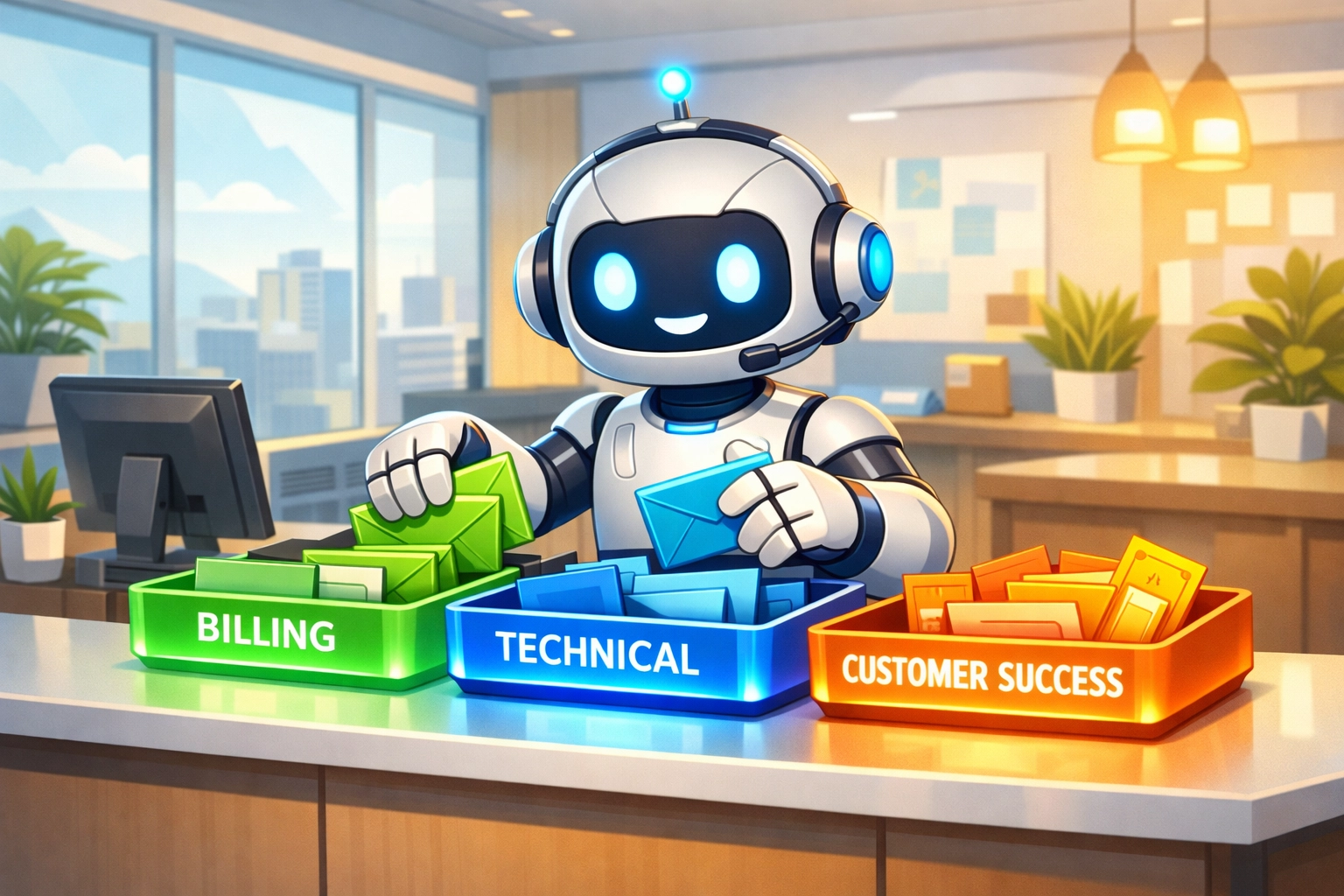
If your support team is drowning in emails, NLP can help triage incoming requests automatically. By analysing the content of each message, NLP systems can route tickets to the appropriate department: billing queries to finance, technical issues to IT, complaints to customer success.
The result? Faster response times, happier customers, and a support team that isn't playing inbox roulette every morning.
3. Instant Translation: Go Global Without the Growing Pains
Expanding internationally? NLP-powered translation tools (like those offered by Google Cloud and AWS) can help you communicate with customers in their native language: whether that's responding to enquiries, localising marketing content, or understanding feedback from new markets.
For small businesses testing international waters, this removes one of the biggest barriers to global reach.
The Upside: Why NLP Is Worth Your Attention
Let's talk benefits. Here's what NLP brings to the table for resource-conscious small businesses:
Speed at Scale Instead of hiring consultants to manually review customer feedback: a process that traditionally takes weeks and costs hundreds of thousands of dollars: NLP algorithms can perform the same analysis in a fraction of the time at minimal cost, as highlighted by AWS documentation.
Consistency You Can Count On Humans get tired. They have bad days. They miss things. NLP processes every piece of feedback with the same level of attention, ensuring nothing slips through the cracks.
Hidden Trends Revealed NLP identifies recurring patterns and developing trends at scale, helping you spot emerging preferences, service gaps, and competitive opportunities you'd never notice manually. Suddenly, those 500 reviews aren't overwhelming: they're a goldmine.
Smarter Customer Segmentation Traditional segmentation relies on demographics: age, location, job title. NLP goes deeper, analysing what customers actually say to create profiles based on specific interests, needs, and sentiment. This enables hyper-personalised marketing that actually resonates.
The Limitations: Where NLP Still Struggles
Now, let's keep it real. NLP isn't magic, and it's important to understand where it falls short:
Sarcasm and Nuance "Oh great, another software update" could be genuine excitement or bitter frustration. NLP has improved dramatically, but it still struggles with sarcasm, irony, and culturally specific humour. Human review remains essential for edge cases.
Cultural Slang and Regional Variations Language varies wildly across regions. A phrase that's perfectly normal in Manchester might confuse an algorithm trained primarily on American English. If your customer base is diverse, you'll need to factor in these limitations.
Data Bias NLP models learn from the data they're trained on. If that training data contains biases: and most large datasets do: those biases can show up in your results. This is where governance becomes critical (more on that shortly).

Three NLP Tools Small Businesses Should Know
Ready to explore? Here are three platforms worth considering, each suited to different needs and technical comfort levels:
Hugging Face : Open-Source Power
If you've got some technical capability (or a developer on speed dial), Hugging Face offers access to thousands of pre-trained NLP models. It's incredibly powerful, highly customisable, and: here's the kicker: largely free to use. Perfect for businesses that want control without vendor lock-in.
Google Cloud Natural Language : Enterprise Scale, SME Accessible
Google's NLP offering integrates seamlessly with other Google Cloud services and handles sentiment analysis, entity recognition, and syntax analysis out of the box. It's pay-as-you-go, so you only pay for what you use: ideal for growing businesses.
MonkeyLearn : No-Code Friendly
Not technical? No problem. MonkeyLearn is designed for business users who want NLP insights without writing a single line of code. Its drag-and-drop interface makes sentiment analysis and text classification accessible to anyone.
The Governance Angle: ISO 42001 and ISO 9001
Here's where things get serious: and where many small businesses overlook a critical step.
When you're using AI to analyse customer communications, you're handling sensitive data and relying on automated decisions. That introduces risk: data privacy concerns, biased outputs, and quality control challenges.
ISO 42001 provides a framework specifically for managing AI systems responsibly. It covers risk assessment, transparency, and human oversight: exactly what you need when deploying NLP tools that influence customer interactions.
ISO 9001 complements this by ensuring quality management across your customer communications. If NLP is generating responses or routing tickets, you need processes to verify accuracy and maintain service standards.
At Expertise, we help small businesses navigate these frameworks without the overwhelm. Whether you're just exploring NLP or already deploying language models, our ISO 42001 Document Readiness Review can help you identify gaps and build governance that grows with your AI ambitions.
Similarly, our ISO 9001 Document Readiness Review ensures your customer communication quality stays consistent as you scale.
Taking the Next Step
NLP isn't just for tech giants anymore. With the right tools and a clear understanding of both the possibilities and the pitfalls, small businesses can unlock insights that were previously out of reach.
Start small. Maybe run sentiment analysis on your last quarter's reviews. See what patterns emerge. Then build from there: always with an eye on governance and quality.
Your customers are already telling you what they want. NLP just helps you finally hear them.
Ready to explore how AI governance fits into your business strategy?Book a pre-audit consultation with our team and let's make sure your NLP journey is built on solid foundations.
Comments