


Can You Hear Me Now? How SpeechTech Is Changing the Way We Work

Picture this: you've just wrapped up a crucial client meeting. Great ideas were flying around, action points were agreed, and everyone left feeling energised. Then it hits you: who was taking notes? You glance at your scribbled pad and realise you've got half a sentence about "synergy" and a doodle of what might be a cat.
Sound familiar? You're not alone. Documentation is one of the biggest time drains for small businesses, and the fear of losing valuable information keeps many of us tethered to our keyboards when we should be focusing on the work that actually matters.
But what if your voice could do the heavy lifting? What if speaking was as powerful as typing: or even more so?
Welcome to the world of SpeechTech, where your words become data and data becomes voice. Let's explore how this technology is quietly revolutionising the way small businesses operate.
What Exactly Is SpeechTech?
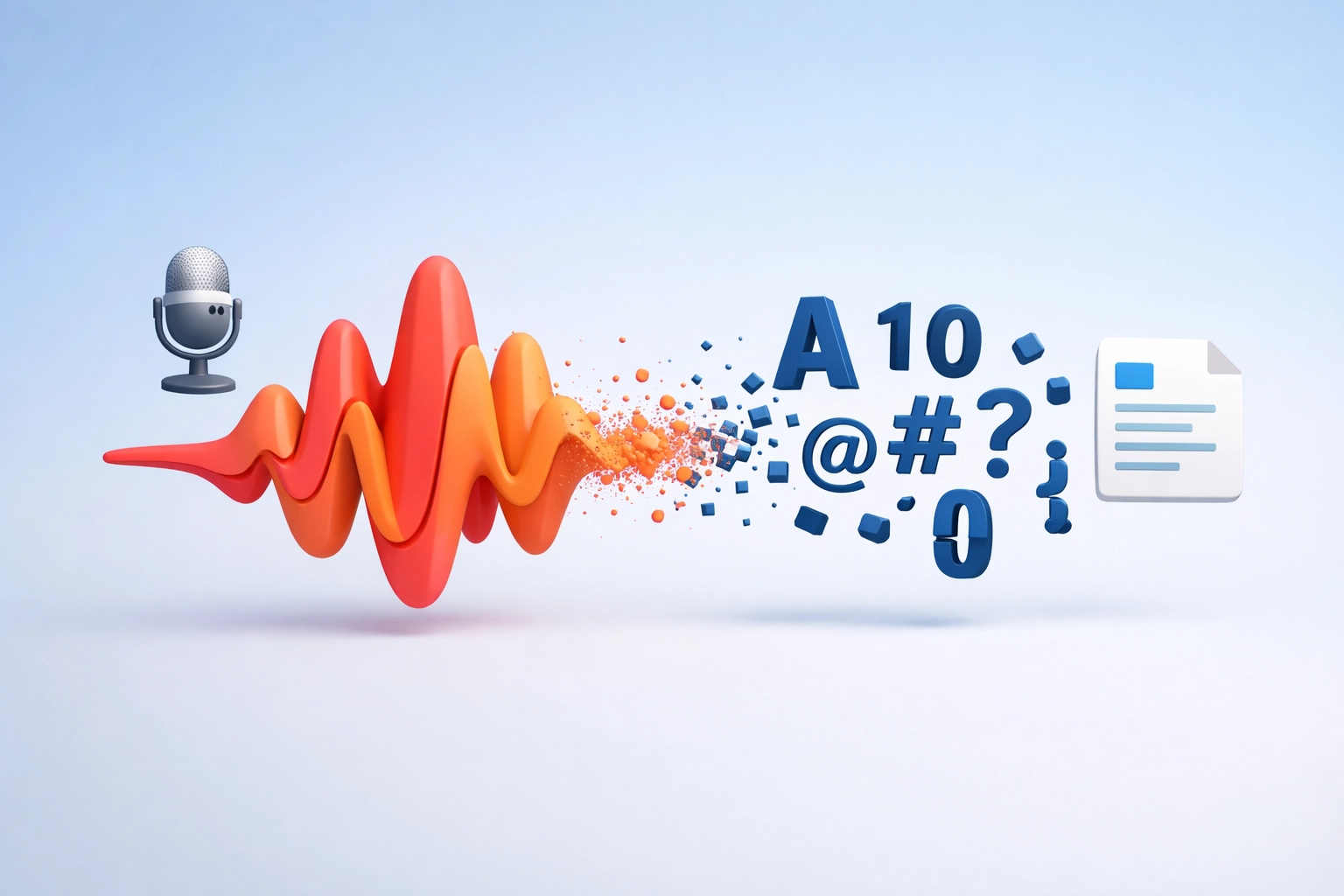
At its core, SpeechTech is the umbrella term for technologies that bridge the gap between human speech and digital systems. It works in two directions:
Speech-to-Text (STT): Converting spoken words into written text
Text-to-Speech (TTS): Converting written text into spoken audio
Think of it as a two-way translator between you and your computer. You talk, it types. You write, it speaks. Simple in concept, but incredibly powerful in practice.
Modern SpeechTech has evolved far beyond the clunky voice recognition of the early 2000s. According to IBM, today's speech AI systems don't just transcribe: they extract insights, identify speakers, and even detect sentiment in real-time. We're no longer talking about dictation software that mishears "fiscal" as "physical." We're talking about intelligent systems that understand context, accents, and nuance.
The Two Sides of the Coin: STT and TTS
Speech-to-Text: Your Virtual Scribe
Speech-to-Text technology has become what many call a "virtual meeting scribe." It automatically transcribes conversations in real-time, handling multiple speakers and diverse accents with increasing accuracy.
The productivity implications are staggering. A 2022 study found that U.S. physicians spend an average of 1.77 hours daily on documentation outside office hours alone. In healthcare, doctors using speech recognition can dictate notes at 150 words per minute compared to just 30 words per minute on a keyboard. That's a five-fold increase in documentation speed.
For small businesses, this translates to:
Instant meeting minutes without dedicated note-takers
Searchable archives of every conversation
More time focusing on clients instead of admin
Text-to-Speech: Giving Your Content a Voice
On the flip side, Text-to-Speech technology converts your written content into natural-sounding audio. This isn't the robotic voice from your old sat-nav: modern TTS engines produce voices that are warm, expressive, and increasingly indistinguishable from human speech.
For SMEs, this opens doors to:
Professional voiceovers for marketing videos without hiring voice actors
Accessible content for visually impaired customers
Multilingual audio content from a single text source
Practical Uses for Small Businesses
So how does this translate to your day-to-day operations? Here are three areas where SpeechTech is making a genuine difference for small businesses:
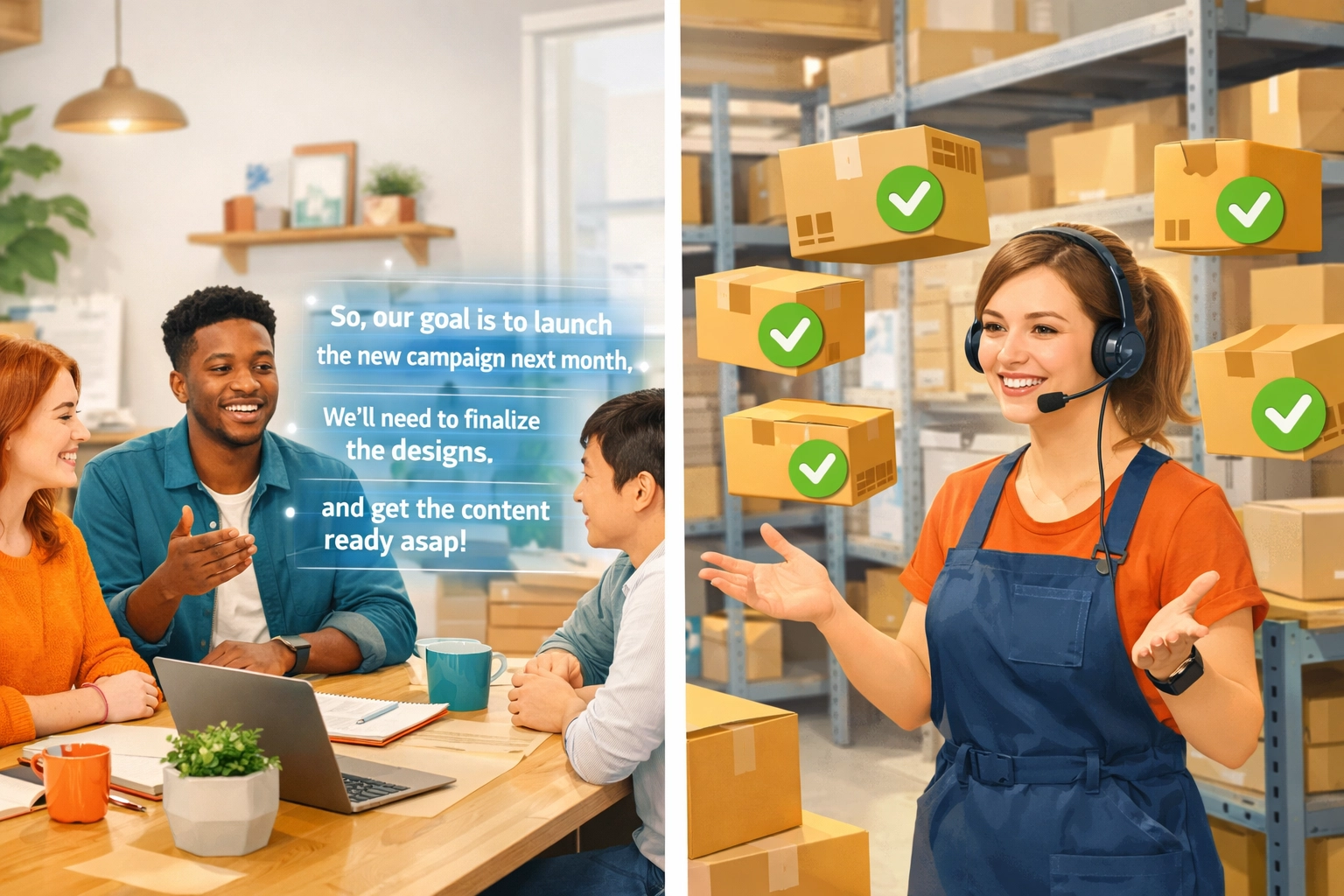
1. Automated Meeting Transcriptions
With over 60% of employees now working remotely according to recent workplace studies, meetings have migrated online. Every Zoom call, Teams meeting, or client consultation generates valuable information: but only if you capture it.
Tools like Otter.ai integrate directly with your video conferencing platforms, automatically joining meetings, transcribing in real-time, and generating summaries. No more frantic typing while trying to maintain eye contact with your webcam.
2. Voice-Commanded Inventory and Operations
For businesses with physical operations: warehouses, workshops, retail spaces: hands-free voice commands are game-changing. Employees can update inventory, log tasks, or access information without putting down tools or touching screens.
Research shows employees spend approximately 60% of their time working with documents, with 30-40% of that spent searching for misplaced information. Voice commands remove friction between thought and action, keeping your team focused on the task at hand.
3. High-Quality Voiceovers for Marketing
Professional voiceover work used to require studio time, voice talent, and significant budget. Now, platforms like ElevenLabs can generate broadcast-quality synthetic voices from text in minutes. Need your explainer video in French, German, and Spanish? Done: without hiring three voice actors.
The Benefits: Why SpeechTech Deserves Your Attention
Let's break down the key advantages:
Accessibility Real-time transcriptions support team members with hearing impairments or language barriers. TTS makes your content accessible to visually impaired customers. In hybrid work environments, SpeechTech creates a more inclusive workplace for everyone.
Productivity Gains Speech-to-text technology removes the barrier between thought and digital output. You can capture ideas at the speed of speech rather than the speed of typing. Sales teams using speech AI platforms have demonstrated 15% higher win rates by identifying successful pitch patterns and providing data-driven coaching.
Documentation Accuracy Human note-takers miss things. They paraphrase. They get distracted. Automated transcription captures everything verbatim, creating accurate records that can be searched, shared, and referenced months later.
The Challenges: What to Watch Out For
No technology is perfect, and SpeechTech comes with its own set of considerations:
Accents and Background Noise While modern speech recognition handles diverse accents far better than previous generations, it still struggles in noisy environments or with strong regional dialects. If your team works in a busy workshop or has team members with less common accents, expect some transcription errors.
Privacy Concerns Recording meetings means capturing potentially sensitive information. Client discussions, strategic planning sessions, HR conversations: all of this data needs protecting. Who has access to your transcriptions? Where are they stored? How long are they retained?
This is where frameworks like ISO 27001 become essential. If you're capturing voice data, you need robust information security controls to protect it. For guidance on preparing your security foundations, our post on simplifying ISO 27001 prep offers practical steps for small businesses.
The Uncanny Valley of Synthetic Voices TTS technology has come remarkably far, but synthetic voices can still feel... off. There's an uncanny valley effect where voices sound almost human but not quite, which can create an uncomfortable experience for listeners. For customer-facing content, test your synthetic voices carefully.
Top 3 SpeechTech Tools for SMEs
Ready to explore? Here are three tools worth investigating:
Tool | Best For | Key Strength |
Otter.ai | Meeting transcription | Seamless integration with Zoom, Teams, and Google Meet. Automatic speaker identification and summary generation. |
AssemblyAI | Developer-friendly transcription | Powerful API for businesses wanting to build speech features into their own applications. Excellent accuracy and customisation options. |
ElevenLabs | Synthetic voice generation | Industry-leading voice cloning and TTS. Create natural-sounding voiceovers in multiple languages from text. |
Governance Matters: ISO Standards and Ethical Use
Here's where we need to have a serious conversation. SpeechTech is powerful: and with power comes responsibility.
ISO 27001 provides the framework for protecting voice data. If you're transcribing client meetings or storing audio recordings, you're handling personal data that requires appropriate security controls. Think about encryption, access controls, retention policies, and secure deletion.
But there's another standard emerging as equally important: ISO 42001 for AI management systems. This framework addresses the ethical use of AI technologies: including synthetic voices.
Consider the implications: if ElevenLabs can clone a voice from a few minutes of audio, what stops bad actors from creating fake audio of your CEO authorising payments? Or synthetic voices impersonating customer service representatives?
Responsible SpeechTech adoption means:
Clear policies on when and how voice data is collected
Transparency with clients and employees about recording
Ethical guidelines for synthetic voice use
Regular audits of your SpeechTech practices
If you're exploring how ISO standards apply to your AI adoption journey, our post on what small businesses really need to know about AI-powered consulting provides additional context.
Your Voice, Your Advantage
SpeechTech isn't about replacing human communication: it's about amplifying it. It's about capturing the ideas that would otherwise evaporate after meetings end. It's about making your content accessible to everyone. It's about freeing your team from administrative burden so they can focus on work that matters.
The technology is mature, the tools are affordable, and the benefits are real. But like any powerful technology, it requires thoughtful implementation and proper governance.
Start small. Try transcribing your next team meeting. Experiment with a synthetic voiceover for internal training content. See what works for your business.
And when you're ready to ensure your SpeechTech adoption is secure, compliant, and ethically sound? Get in touch with our team at Expertise. We're here to help you navigate the intersection of innovation and governance.
What's your experience with SpeechTech? Have you tried automated transcription or synthetic voices in your business? Drop us a message: we'd love to hear your story.
Sources: IBM Speech AI Research, Otter.ai, ElevenLabs, AssemblyAI, Gartner Workplace Productivity Studies
Comments